History of Art & Photography

We had a lecture off Chris and there was a lot of discussion & debate. He talked about Cave Art and how the earliest dates back 30.000 years, during the time of this art work being created the men would have been using natural Malena's like red and yellow ochre, hematite, magnesium oxide and charcoal and all these would be classed as tool. There was a lot of debate as to why these people might have been doing this art. A lot of people suggested that it was done to pass the time like a hobby, my personal thought include this but also that they wanted future people to know what they did to survive and how they lived. You can see an example of this above. It was discovered in Altamira Spain after a fallen tree disturbed the entrance. In 1880 it was opened to the public and it measures between 2-6 meters in height and is approximately 270 meters long with a series of passages leading off the main passage. This cave is famous for the drawings of human hands and animals. It was very interesting learning and discussing this kind of work.
We also learnt about La march France which is another cave with art inside this is an example of the art.

Its also very interesting how they lived and survived many years ago, it's such a contrast has to how we live now, with all the technology and how much we have advanced profoundly i found it extremely over whelming the sheer intensity of how they survived. It is said that values are passed down through art with the cave work we are able to decode and understand to a degree.

Venus Of Willendorf was also a topic discussed and how the small stone structures represent the ideal mother. Her large breast's suggesting breast feeding and her fat representing being looked after and well fed by the men, and child bearing hips representing reproduction, all of this caused a lot of discussion as women today are expected to be sex icon's with slim bodies and implants in order to have the large breasts. The carving's that have been found leads us to think the women played a very important part in the way of life back then and it is said that the carvings were reflecting and symbolising their culture, their way of life and points of view. Their lives were pragmatic and they were merely existing and hunting to survive.
--------------------------------------------------------------------------------------------------------------------------------------------------------
Aaron Siskind

Aaron Siskind began taking photographs when he received a camera as a wedding gift, he soon realised artistic potential he had to offer, and his work looked at the details of nature and architecture and he presented them as flat surfaces to create a new image out of them, which he claimed stands independent og the original subject.


In 1945 Aaron Published "The Drama of Objects" which was the start of many more books that were to be published in the years ahead. He was an American abstract expressionist photographer. He died in Province RI, February 8th 1997 and he was 87 years of age. Between 1966 and 1983 he received numerous awards including the gold star of merit award from Philadelphia College Of Art, NEA grant and the Governor's Prize for the arts, Rhodes Island.
Aaron Siskind - Wall AbstractAaron Siskind - Wall Graffiti
--------------------------------------------------------------------------------------------------------------------------------------------------------
Jordanian Cave

Hellenistic style wall paintings in Jordanian Cave's have been restored by a group of experts from Courtauid Institute London. They have removed around 2.000 years of dirt, soot, grime, smoke and grease, this delicate operation enabled us to see the sheer beauties of the art including a picture of a winged child playing the flute after the experts restored these by removing the dirt and grime it has been said that the art is far more superior than some of the existing Roman paintings at Herculaneum which were also inspired by Hellenistic Art.
Hellenistic art dates from 323bc to 146bc and it includes Greek sculptures Laocoon & his son Venus De Milo which also belongs to this.

--------------------------------------------------------------------------------------------------------------------------
.
Laocoon
Laocoon

Egyptians dominated for thousands of years as they had infrastructure and mechanism
in order to produce pyramids. They had the ability to create an Aur and it can be overwhelming which in turn could produce fear upon us making us feel small compared to the giant structures . Their contemporary stories were passed down through language Abydos is one of the most important archaeological sites of Ancient Egypt, where it homed Umm El Qaab which was a large mainly royal tombed cemetery.
Photograph's taken at Manchester Museum


Umm El Qaab

Abydos art work gives a sense of depth with wealthy kings so powerful and rich they could force thousands of workers and slaves to toil for them year in and year out, Forcing them to carry and place all the heavy rocks until the pyramids were ready to receive their king. The tombs were built in order to preserve the body so they were mummified to keep the souls alive. The kings would be in the center of the tomb and as time went on all his family would be surrounded around him, followed by his noble servants. The combination of geometric regularity and keen observations of nature is characteristic of all Egyptian Art.
--------------------------------------------------------------------------------------------------------------------------- Parthenon

Pre Parthenon and was destroyed in the Persian Invasion of 480bc. The Parthenon is considered to be one of the greatest cultural monuments of all time.
Trajan's Conquests on columns

Spartiates enjoyed full rights the mothakesspartiates
Phidias Work
Ancient Rome Sculpture & Coliseums


The Roman empire at its height was the greatest in history, by the end of the republic which saw the overthrow of the Roman monarchy being replaced with the 2 consuls who both served a year in power. It then became highly developed in military and politics which resulted in them creating the government and in turn they became the inspiration for many other countries governments. The Romans dominated southern and Western Europe, parts of eastern Europe, Asia and according to recent research, beyond Haydrians Wall in the north, all this was gained through their conquests, which they dominated for up to 2.000 years.

It had over a million inhabitants in what,s known as their "golden period" the first century BC and the first two centuries AD. A city of this size could not be supported by local produce alone, so goods which was mainly grain and foodstuffs, were brought in from all over the empire and beyond, although trade under the roman empire was a complex affair. Roads that the romans built throughout their empire had increased security with the army and navy hiring pirates and bandits. The Edict on Prices' was issued by the emperor Diocletian in AD302, this being the price list for transport by sea and land, and it was issued in denarii which was the standard Roman coin. It is said that land transport was about thirty times more expensive than sea and yet it would have took considerably longer.
While Rome was such a powerful country there were still classes in the way people lived. The upper class known as patricians lived in bricked houses with beautiful paintings on the walls and mosaic floors which often told a story.

Patricians home wall decor.

Patricians Mosaic Floors
While the lower class known as Plebeians were less fortunate with whole families living in small confined flats and apartments which were mainly built with wood and clay, they didn't have the luxury of water or lavatories they had to use communal facilities. Although they were the lower class they still shared the a lot with the upper class like worshipping the same god, talking the same language which was Latin, and the family structures were the same with the oldest man in the family being the head. Women from both classes also had no authority except in the homes.

Plebeians home
--------------------------------------------------------------------------------------------------------------------------------------------------------
Garden Of Earthly Delights
This is a oil painting which was produced by Hoeronymus Bosch, it is now housed at The Museo Del Prado in Madrid where it has been homed there since 1939. He painted this when he was approximately 40-50 years of age. The Garden Of Earthly Delights is made up of 3 picture which were painted on wood there is a square picture in the middle and two rectangle picture to each side forming a triptych which could be considered as a time line, telling a story of the beginning and the end. Although the title of this painting is Garden Of Earthly Delights it has also been referred to as the Millennium.
The left hand picture seems to show God presenting Eve to Adam in the beautiful surroundings of The Garden Of Eden. The hand of God being raised symbolises the blessing of the couple and consent to the relationship. according to the bible he said to them "be fruitful and multiply, fill the earth and subdue it, have domination over the birds of the air and over every living thing that moves upon earth"


While Eve looking away from Adam seems to imply awkwardness and tension between them, Adam though looks on in amazement at the fact that she is human form like him and he's encountering the urge to reproduce for the first time while the rabbits behind Eve could also symbolise reproduction. Many believed that the first sin committed after Eve tasted the forbidden fruit was carnal lust although this could be contradicted with the hand of God seemingly blessing the pair.


The right hand picture seems to show the end of the earth, with the raging fires which could represent the burning fires of hell, there are people (sinners maybe) being carried and thrown into what looks like a burning pool of lava. While others are being executed and led to what looks like torching machines. The pair of ears which have a knife going through them could symbolise the end, especially with the "M" being inscribed on the knife, as it is the symbol of mundane which is relating to the world or worldly matters.
The woman under the knife seems to be being ridden like a horse which could symbolise prostitution. The tree man has the face of Hieronymus Bosch himself, which shows his body open and people sat around a table which could symbolise his gambling also the lady pouring more beer from a keg could represent him drinking alcohol. Underneath his body there is another man with an egg on his back so this might imply that the body of the tree man is a cracked egg representing the breaking of rules. Satan maybe represented with the birds head and he is eating sinners that he has caught, and then defecating on them through his throne shaped toilet into a pit. The man defecating coins may have stolen money and that is his punishment for stealing. While in the left bottom corner there is a gambling table upturned and demons are torturing the gamblers. All this seems to be implying that hell will punish all sinners one way or another.

When the sides are closed together it seems to make a Grissel picture of the earth during the creation of it. The earth contains vegetation although it has no content of human or animal life which seems to indicate the events of the biblical third day. Bosch seems to render the plant life unusually with lots of grey tints, which in turn makes it difficult to see whether the vegetable are purely vegetables or maybe includes some mineral formations. All of this on the front seems to be a contrast of the paradise of lustful harmony that faces us on the centre piece.
---------------------------------------------------------------------------------------------------------------------------
Da Vinci
April 15, 1452 – May 2, 1519.


The painting is a half-length portrait and depicts a seated woman, Lisa Del Giocondo whose facial expression has been frequently described as enigmatic. The ambiguity of the subject's expression, the monumentality of the composition, and the subtle modelling of forms and atmospheric illusionism were novel qualities that have contributed to the continuing fascination and study of the work The image is widely recognised, caricatured, and sought out by visitors to the Louvre, and it is considered the most famous painting in the world. Leonardo Da Vinci began painting the Mona Lisa in 1503 or 1504 in Florance Italy. And according to Da Vinci's understudy Giorgio Vasari he said after Da Vinci had lingered over it four years, left it unfinished. It is known that such behaviour is common in most paintings of Leonardo who, later in his life, regretted "never having completed a single work.
He is thought to have continued to work on Mona Lisa for 3 years after he moved to France and he finished it shortly before he died in 1519. Leonardo took the painting from Italy to France in 1516 when the King invited Da Vinci to work near the king's castle in Amboise. Most likely through the heirs of Leonardo's assistant Salai, the king bought the painting and kept it at Chateau Fontainebleau and it remained there until it was given to Louis XIV and he moved the painting to the Palace of Versailles and it stayed there till after the French revolution when it was moved to Louvre. During the War in 1870 it was then moved to the Brest Arsenal.
Over the years there been a lot of speculation regarding the painting's model and landscape. An example of this was that Leonardo probably painted his model faithfully and true to form as her beauty is not seen as being among the best. Mona Lisa did not become well known until the mid-19th century when artists began to appreciate it, and associated it with their ideas about feminine mystique. Critic Walter Pater expressed this view by describing the figure in the painting as a kind of mythic embodiment of eternal femininity, who is "older than the rocks among which she sits" and who "has been dead many times and learned the secrets of the grave.
Da Vinci proceeded to combat and find solutions for everyday life, he had ideas that would be used in years to come for instance the airplane, he tried to design something that would enable people to use to sky as a form of transport although the plan didn't work it was tailored to work for us all years later. He was full of ideas and tried to bring them ideas to life he also thought about the car


As the model of the Da Vinci Car was observed to move, change direction, stop and start it was considered to hazardous to the public although over the years it has been modified and adapted for our use today. His ideas were based on cogs and rowing techniques which were considered in everyday life back then as they were easy to make and the equipment was easily found. Da Vinci was a very clever man and his abilities were endless he had such a creative image of everything and he able to pass this on in his notes, when he passed away he left all these to his understudy and now today we refer to them one way or another.
The most concerning part of Leonardo's personal life is that a Florentine courts record shows that in 1476, Leonardo and two others were accused of sodomy with a male prostitute. The charges were dismissed for lack of evidence, and there is speculation that since one of the other two men Leonardo de Tornabuoni, was related to Lorenzo De Medici and the family exerted its influence to secure the dismissal. Sodomy was theoretically an extremely serious offense, carrying the death penalty, but its very seriousness made it equally difficult to prove. It was also an offence for which punishment was very seldom handed down in contemporary Florence. Leonardo had two long-lasting associations with young men. These were his pupils Gian Giacomo Caprotti da Oreno who was nicknamed Salai he entered his household in 1490 at the age of 10, and Count Francesco Melzi who was the son of a Milan aristocrat who became apprenticed to Leonardo in 1506, at the age of 14. Leonardo was never married and his association with females were anatomical sketches and included only two detailed works on female reproductive organs, one of them uncharacteristically distorted. While this is not evidence of a loss of sexuality, but much more as a lack of interest in women and so never had children.
--------------------------------------------------------------------------------------------------------------------------------------------------------

Voyage Of Life
Thomas Cole
The voyage of life youth
The voyage of life manhood
The voyage of life old age
Thomas was born not far away from our town, only up the road in Bolton Lancashire. His was born 1st February 1801 and died February 11th 1848. He later emigrated to Steubenville Ohio in the United States with his family. He originally trained as a woodblock engraver and when he moved to Steubenville he worked on patterns and probably more woodblock engraving there. Later in life Thomas moved to Pittsburgh and then went onto Philadelphia in 1824 and then in 1825 he moved to New York City to be with his parents. During his time in Philadelphia he attended one of the oldest Museums and Art Schools in America, The Pennsylvania Academy of Fine Arts which is well known for its 19th and 20th century American paintings and sculptures. When Thomas was in New York he displayed five landscapes in the shop window of William Coleman's bookstore
two of them featured Coldsprings which he painted when George W Bruen paid for a summer trip to Hudson Valley for him to painted The Catskill Mountain House and Kaaterskill Falls.

The Catskill Mountain House - askart.com
Kaaterskill Falls. - artmight.com

Fort Ticonderoga - artgalleryabc.com
Mr A Seton purchased both of these and then lent them to the American Academy Of Fine Arts annual exhibition in 1826. This exhibition gained him the attention of some of the city's most important artists and patrons. Including John Trumbull with the painting Fort Ticonderoga From Gelyna after searching for Thomas he bought one of his painting and introduced him to a number of wealthy people who became important patrons of Thomas and from then on his future of a landscape painter was assured he then decided to go to Europe to study the great works of the past. His visits to the great galleries of London and Paris and, more important, his stay in Italy from 1831 to 1832, filled his imagination with high-minded themes and ideas. A true Romantic spirit, he sought to express in his painting the elevated moral tone and concern with lofty themes previously the province of history painting. He had also become one of the founding members of the National Academy of Design and was generally recognized as America's leading landscape painters.
When he returned to New York he found an enlightened patron in the New York merchant Luman Reed, who commissioned from him The course of Empire which is a five-canvas extravaganza depicting the progress of a society from the savage state to an apogee of luxury and, finally, to dissolution and extinction.


Cole's remarkable oeuvre, in addition to naturalistic American and European views, consisted of Gothic fantasies, religious allegories, and classicized pastorals. He consistently recorded his thoughts in a formidable body of writing: detailed journals, many poems, and an essay on American landscapes. He also fostered the careers of Asher B. Durand and Frederic E. Church, which were two artists who would continue the painting tradition he had established. Though Cole's unexpected death after a short illness sent a shock through the New York art world, the many achievements that were his legacy provided a firm ground for the continued growth of the school of American landscape.
Bibliography - www.wikipeadia.com
---------------------------------------------------------------------------------------------------------------------------
Raphael

Born April 1483 in Italy
Died April 1520
Raphael was known as an Italian painter and architect of the renaissance period, he lost both of his parents at a young age and was then brought up by his uncle who was a priest, He also spend time with his step mother and she helped to raise him in many ways. He began to show he had a great talent at an early age with the self-portrait above although he didn't really have any formal education. His father was a painter for the duke and was also a poet and so his work was classed as more literal than artistic. So for Raphael growing up in the court environments gave him great confidence and enabled him to mix easier with people especially with people in the higher ranks of society. He was a very dynamic man and when he was young his father sent him to The Umbrian Masters Pietro Peruginos workshop where he became Peruginos apprentice. Perugino had a great influence on Raphael and he certainly soaked up a lot of the teaching Perugino had give him evidently with the use of applying thick paint. One of Raphael's first pieces of work was Barconci Alterpiece which was painted for St Nicholas of Tolentino in the Citta Di Castello, this was commissioned in 1500 and completed by 1501

Sadly there is only cut sections and a preparatory of drawings that remain. The years that followed in Raphael's life were mainly paintings in churches. The Mond Crucifixion in San Domenico Church was painted by Raphael and this painting demonstrates the vast influence Perugino had on Raphael with the use of oil varnish in shadowed and darker areas and again the thickness of the applied paint. I particularly like how Raphael as portrayed Jesus as being at peace even though he is dying and also the fact that he has included St Jerome in the painting although it was dedicated to him originally.

Raphael spent a lot of his time moving around but he did spend more time in Florence than anywhere else, this may have been to enable him to secure his materials for his work. While in Florence he was also able to assimilate the influences of Florentine Art although he still kept his own tranquil style. After Leonardo Di Vinci returned Raphael's work took a more dynamic and complex look and he started to paint nudes and men fighting which was a stark contrast to his earlier paintings.
By 1508 Raphael had moved to Rome where he was to spend the rest of his life, when he arrived in Rome he was commissioned straight away by Julius to Fresco which was the Popes Library at the Vatican Palace. This work was one of the biggest pieces he had done this then was named the famous Raphael's Rooms with Stanza Della Segnatura being a very well-known art piece that had a big impact on Roman Art and some of his great masterpieces where then completed in other rooms on walls and ceilings. The school of Athens was the second piece Raphael did there which also became one of his masterpieces, this one was described as the perfect embodiment of the classical spirit of the Renaissance some of these were to be his last pieces. When Raphael died he had a workshop with approximately 50 pupils and assistant's one being Giulio Romano who was left all Raphael's drawings and other possessions along with some other carefully selected people. Giulio then continued to run the workshop. Raphael never married in his short lifetime although he was engaged to Maria Bibbiena he had countless affairs with other ladies which resulted in his untimely death due to being given the wrong medication which sadly took his life. Raphael's work is known for its perfect compositions, purity of taste and sheer beauty.

Popes library, Stanza Della Segnatura, Rome
Bibliography = www.wikipeadia.com
---------------------------------------------------------------------------------------------------------------------------
Bauhaus


The term Bauhaus as an inversion of ‘Hausbau’
Walter Gropius,
Born in Berlin on May 18, 1883 and died July 1969 founder of Bauhaus school of architecture. Leaving the Bauhaus in 1928 he worked as an architect in Berlin, and then in 1934 he moved to London. He was then appointed the head of the architecture department at Harvard University in 1937.
Born in Berlin on May 18, 1883 and died July 1969 founder of Bauhaus school of architecture. Leaving the Bauhaus in 1928 he worked as an architect in Berlin, and then in 1934 he moved to London. He was then appointed the head of the architecture department at Harvard University in 1937.
Bauhaus no 8 Geschwister-Scholl Strasse built in 1911 and designed by Van De Velde, the school was built for modern architecture and construction. It was the front model of the modern art schools and it was the first of its kind to combined theoretic education as well as practical training and it housed around 3.000 students. The work that came from Bauhaus was part of the revolutionary art movements and design experiments of the early 20th century. Bauhaus style is characterized by its severely economic, geometric design and by its respect for materials. The impact of Bauhaus is very under estimated while it has a great way of communicating and it has been stylised all over the world.
FORM FOLLOWS FUNCTION


The school goes back to the Art School founded in 1860 and directed by Stanislaus Grafvon Kalckreuth. In 1907 it was combined with the college of arts and crafts which was founded by Henry Van De Velde. Students were encouraged to design with mass-produced goods in mind. Enormously controversial and unpopular with right wingers in Weimar. After the Bauhaus architects were run out of town by the right wing conservatives in 1925 and it then became known as the College of Trades and Architecture. The school then reopened as The State College of Architecture and Fine Arts in 1946 after the occupation of Weimar by the Communist Soviet Union. In 1951 the fine arts were dropped from the title and between then and 1962 the school included communist workers and farmers in addition to the building trades classes. The school had some illustrious names among it’s teachers, including Paul Klee, Lyonel Feininger, Wassily Kandinsky, Laszlo Moholy-Nagy and Marcel Breuer. Its influence in design of architecture, furniture, typography and weaving has lasted to this day – the look of the modern environment is almost unthinkable without it.

Bibliography = http://toffsworld.com/lifestyle/art-information/bauhaus/
--------------------------------------------------------------------------------------------------------------------------------------------------------
Piet Mondrian


Piet Mondrian was born Pieter Cornelius Mondriaan in Amersfoort Netherlands, in March 1872
and sadly died in February 1944
At the young age of 14 he completed his primary education. His father, the headmaster of a primary school and a drawing instructor himself, supported his son's decision to study for a diploma teaching free hand drawing in primary and secondary schools. He then completed his diploma in 1892 at the Rijksacademie, Holland. During the four years of his studies he supported himself by giving private lessons, and selling landscape paintings and scientific drawings.


Piet was a painter, a prolific writer and theorist, and was drawn to spiritual and philosophical studies. and contributed to the De Stijl art movement an influential Dutch art movement that advocated pure abstraction to express a Utopian idea of universal harmony between 1917-25, which was founded by Theo Van Doesburg, He radically simplified the elements of his artwork in an effort to reflect what he believed to be the order underlying the visible world. He evolved a non-representation form which he named Neo Plasticism, a contemporary and disciple of the famous cubists Pablo Picasso and Georges Braque. Despite being well-known, often-parodied, and even trivialized, Mondrian's paintings exhibit a complexity that believes their apparent simplicity. Mondrian's first exhibition of two drawings in 1890 received favourable reviews. (Royal Academy).
From 1897 to 1909 Mondrian painted scenes of Dutch landscapes with mills, trees, farms, and the Gien River near Amsterdam. The non-representational painting's for which he is best known, consisting of rectangular forms of primary colours separated by thick black rectilinear lines, are actually the result of a stylistic evolution that occurred over the course of nearly thirty years, and continued beyond that point to the end of his life. Piets work was stylized, sharp, and simplified images. His work has been described as vertical and horizontal visions of space and easily the most simplified image changes from fugitive art.

Dutch pioneer of abstract art, which developed from early landscape pictures to geometric abstract works of a most rigorous kind. From 1897 to 1909 Mondrian painted scenes of Dutch landscapes with mills, trees, farms, and the Gien River near Amsterdam. His work went from expression to abstraction.

On borrowed money, Mondrian arrived in New York in October 1940. Harry Holtzman had found and paid for his apartment and studio and introduced him to his friends. In New York Mondrian concluded his career with monumental works like "Broadway Boogie Woogie" and due to his untimely death the unfinished" Victory Boogie Woogie. Piet died of pneumonia in a New York hospital.
Bibliography = http://paintings.name/piet-mondrian-biography.php
---------------------------------------------------------------------------------------------------------------------------
Fountain

Fountain was the work of Marcel Duchamp
Born in Blainville Crevon, France
July 1887 to October 1968

It is one of the pieces which he called ready-mades which included pieces where he made use of an already existing object. In this case Duchamp used a urinal in 1917. He titled this Fountain and signed "R. Mutt". Duchamp bought a urinal from a plumbers' merchants, and submitted it to an exhibition organised by the Society of Independent Artists. The Board of Directors, who was bound by the constitution of the Society to accept all members' submissions, took exception to the Fountain and refused to exhibit it. Duchamp and Arensburg, who were both on the Board, resigned immediately in protest. The work is regarded by some as a major landmark in 20th century art, with our lecturer being one who said "It is the most important piece of art of all time" Replicas commissioned by Duchamp in the 1960s are now on display in a number of different museums as the exhibition were it was presented lost the original image. Of all the works in this series of ready-mades, Fountain is perhaps the best known because the symbolic meaning of the toilet takes the conceptual challenge posed by the ready-mades to their most visceral extreme.
In December 2004, Duchamp's Fountain was voted the most influential artwork of the 20th century by 500 selected British art world professionals. The independent noted in a February 2008 article that with this single work, Duchamp invented conceptual art and "severed forever the traditional link between the artist's labour and the merit of the work".
Duchamp adamantly asserted that he wanted to "de-deify" the artist. The ready-mades provide a way around inflexible either-or aesthetic propositions. They represent a Copernican shift in art. Fountain is what's called an "acheropoietoi," an image not shaped by the hands of an artist. Fountain brings us into contact with an original that is still an original but that also exists in an altered philosophical and metaphysical state. It is a manifestation of the Kantian sublime: A work of art that transcends a form but that is also intelligible, an object that strikes down an idea while allowing it to spring up stronger.
Anonymous article in The Blind Man # 2, May 1917.
Written by Beatrice Wood, H.P. Roché and/or Marcel Duchamp.
The Richard Mutt Case
They say any artist paying six dollars may exhibit.
Mr. Richard Mutt sent in a fountain. Without discussion this article disappeared and was never exhibited.
What were the grounds for refusing Mr. Mutt's fountain:
1. Some contend it was immoral, vulgar.
2. Others, it was plagiarism, a plain piece of plumbing.
Now Mr. Mutt's fountain is not immoral, that is absurd, no more than a bath tub is immoral. It is a fixture that you see every day in plumbers' show windows.
Whether Mr. Mutt with his own hands made the fountain or not has no importance. He CHOSE it. He took an ordinary article of life, placed it so that its useful significance disappeared under a new title and point of view – created a new thought for that object.
As for plumbing, that is absurd. The only works of art America has given are her plumbing and her bridges.
Published in: Robert Lebel: Marcel Duchamp.
New York: Paragraphic Books, 1959, pp. 77/78.
Session on the Creative Act
Convention of the American Federation of Arts Houston, Texas, April 1957
Participants:
Professor Seitz, Princeton University
Professor Arnheim, Sarah Lawrence College
Gregory Bateson, anthropologist
Marcel Duchamp, mere artist
THE CREATIVE ACT
by Marcel Duchamp
Let us consider two important factors, the two poles of the creation of art: the artist on the one hand, and on the other the spectator who later becomes the posterity.
To all appearances, the artist acts like a mediumistic being who, from the labyrinth beyond time and space, seeks his way out to a clearing. If we give the attributes of a medium to the artist, we must then deny him the state of consciousness on the esthetic plane about what he is doing or why he is doing it. All his decisions in the artistic execution of the work rest with pure intuition and cannot be translated into a self-analysis, spoken or written, or even thought out.
T.S. Eliot, in his essay on "Tradition and Individual Talent", writes: "The more perfect the artist, the more completely separate in him will be the man who suffers and the mind which creates; the more perfectly will the mind digest and transmute the passions which are its material."
Millions of artists create; only a few thousands are discussed or accepted by the spectator and many less again are consecrated by posterity.
In the last analysis, the artist may shout from all the rooftops that he is a genius: he will have to wait for the verdict of the spectator in order that his declarations take a social value and that, finally, posterity includes him in the primers of Artist History.
I know that this statement will not meet with the approval of many artists who refuse this mediumistic role and insist on the validity of their awareness in the creative act – yet, art history has consistently decided upon the virtues of a work of art through considerations completely divorced from the rationalized explanations of the artist.
If the artist, as a human being, full of the best intentions toward himself and the whole world, plays no role at all in the judgment of his own work, how can one describe the phenomenon which prompts the spectator to react critically to the work of art? In other words, how does this reaction come about?
This phenomenon is comparable to a transference from the artist to the spectator in the form of an esthetic osmosis taking place through the inert matter, such as pigment, piano or marble.
But before we go further, I want to clarify our understanding of the word 'art' - to be sure, without any attempt at a definition.
What I have in mind is that art may be bad, good or indifferent, but, whatever adjective is used, we must call it art, and bad art is still art in the same way that a bad emotion is still an emotion.
Therefore, when I refer to 'art coefficient', it will be understood that I refer not only to great art, but I am trying to describe the subjective mechanism which produces art in the raw state – à l'état brut – bad, good or indifferent.
In the creative act, the artist goes from intention to realization through a chain of totally subjective reactions. His struggle toward the realization is a series of efforts, pains, satisfaction, refusals, decisions, which also cannot and must not be fully self-conscious, at least on the esthetic plane.
The result of this struggle is a difference between the intention and its realization, a difference which the artist is not aware of.
Consequently, in the chain of reactions accompanying the creative act, a link is missing. This gap, representing the inability of the artist to express fully his intention, this difference between what he intended to realize and did realize, is the personal 'art coefficient' contained in the work.
In other words, the personal 'art coefficient' is like an arithmetical relation between the unexpressed but intended and the unintentionally expressed.
To avoid a misunderstanding, we must remember that this 'art coefficient' is a personal expression of art à l'état brut, that is, still in a raw state, which must be 'refined' as pure sugar from molasses by the spectator; the digit of this coefficient has no bearing whatsoever on his verdict. The creative act takes another aspect when the spectator experiences the phenomenon of transmutation: through the change from inert matter into a work of art, an actual transubtantiation has taken place, and the role of the spectator is to determine the weight of the work on the esthetic scale.
All in all, the creative act is not performed by the artist alone; the spectator brings the work in contact with the external world by deciphering and interpreting its inner qualification and thus adds his contribution to the creative act. This becomes even more obvious when posterity gives a final verdict and sometimes rehabilitates forgotten artists.
|
Lecture at the Museum of Modern Art, New York, October 19, 1961.
Published in: Art and Artists, 1, 4 (July 1966).
Marcel Duchamp
Apropos of 'Readymades'
IN 1913 I HAD THE HAPPY IDEA TO FASTEN A BICYCLE WHEEL TO A KITCHEN STOOL AND WATCH IT TURN.
A FEW MONTHS LATER I BOUGHT A CHEAP REPRODUCTION OF A WINTER EVENING LANDSCAPE, WHICH I CALLED "PHARMACY" AFTER ADDING TWO SMALL DOTS, ONE RED AND ONE YELLOW, IN THE HORIZON. IN NEW YORK IN 1915 I BOUGHT AT A HARDWARE STORE A SNOW SHOVEL ON WHICH I WROTE "IN ADVANCE OF THE BROKEN ARM." IT WAS AROUND THAT TIME THAT THE WORD READYMADE CAME TO MIND TO DESIGNATE THIS FORM OF MANIFESTATION. A POINT WHICH I WANT VERY MUCH TO ESTABLISH IS THAT THE CHOICE OF THESE "READYMADES" WAS NEVER DICTATED BY ESTHETIC DELECTATION. THIS CHOICE WAS BASED ON A REACTION OF VISUAL INDIFFERENCE WITH AT THE SAME TIME A TOTAL ABSENCE OF GOOD OR BAD TASTE – IN FACT A COMPLETE ANESTHESIA. ONE IMPORTANT CHARACTERISTIC WAS THE SHORT SENTENCE WHICH I OCCASIONALLY INSCRIBED ON THE "READYMADE." THAT SENTENCE INSTEAD OF DESCRIBING THE OBJECT LIKE A TITLE WAS MEANT TO CARRY THE MIND OF THE SPECTATOR TOWARDS OTHER REGIONS MORE VERBAL. SOMETIMES I WOULD ADD A GRAPHIC DETAIL OF PRESENTATION WHICH IN ORDER TO SATISFY MY CRAVING FOR ALLITERATIONS, WOULD BE CALLED "READYMADE AIDED." AT ANOTHER TIME WANTING TO EXPOSE THE BASIC ANTINOMY BETWEEN ART AND READYMADES I IMAGINED A "RECIPROCAL READYMADE": USE A REMBRANDT AS AN IRONING BOARD! I REALIZED VERY SOON THE DANGER OF REPEATING INDISCRIMINATELY THIS FORM OF EXPRESSION AND DECIDED TO LIMIT THE PRODUCTION OF "READYMADES" TO A SMALL NUMBER YEARLY. I WAS AWARE AT THAT TIME, THAT FOR THE SPECTATOR EVEN MORE THAN FOR THE ARTIST, ART IS A HABIT-FORMING DRUG AND I WANTED TO PROTECT MY "READYMADES" AGAINST SUCH CONTAMINATION. ANOTHER ASPECT OF THE "READYMADE" IS ITS LACK OF UNIQUENESS. . . THE REPLICA OF THE "READYMADE" DELIVERING THE SAME MESSAGE; IN FACT NEARLY EVERY ONE OF THE "READYMADES" EXISTING TODAY IS NOT AN ORIGINAL IN THE CONVENTIONAL SENSE. A FINAL REMARK TO THIS EGOMANIAC'S DISCOURSE: SINCE THE TUBES OF PAINT USED BY AN ARTIST ARE MANUFACTURED AND READY MADE PRODUCTS WE MUST CONCLUDE THAT ALL THE PAINTINGS IN THE WORLD ARE "READYMADES AIDED" AND ALSO WORKS OF ASSEMBLAGE. |
Quotes
Peut-on faire des œuvres qui ne soient pas "d'art"?
1913 [In: S. Stauffer (ed.): Marcel Duchamp: Die Schriften, Vol. I. Zürich: Regenbogen-Verlag, 1981, p. 125.]
"The spectator makes the picture."
Dalia Judovitz: "Rendez-vous with Marcel Duchamp: Given ", Dada/Surrealism 16 (University of Iowa, 1987), p. 187.
"L' idée de jugement devrait disparaître."
[Source?]
"You see, I don't want to be pinned down to any position. My position is the lack of a position."
Arturo Schwarz: The Complete Works of Marcel Duchamp (London: Thames and Hudson, 1969), p. 194.
|
---------------------------------------------------------------------------------------------------------------------------
Surealism
The Surrealist movement was founded in Paris 1924 by a small group of writers and artists who sought to channel the unconscious as a means to unlock the power of the imagination. Disdaining rationalism and literary realism, and powerfully influenced by Freud, the Surrealists believed the conscious mind repressed the power of the imagination, weighting it down with taboos. Influenced also by Marx, they hoped that the psyche had the power to reveal the contradictions in the everyday world and spur on revolution. Their emphasis on the power of the imagination puts them in the tradition of Romanticism, but unlike their forbears, they believed that revelations could be found on the street and in everyday life. The Surrealist impulse to tap the subconscious mind, and their interests in myth and primitives, went on to shape the Abstract Expressionists, and they remain influential today. The term surrealism was first coined in 1917, when Guillaume Apollinaire used it in program notes for the ballet Parade, written by Pablo Picasso, Leonide Massine, Jean Cocteau, and Eric Satie. It began as a literary group strongly allied to the Dada movement, and emerged in the wake of the collapse of the group in Paris, when André Breton's eagerness to bring purpose to the group clashed with Tristan Tzara's anti-authoritarianism. Breton who is occasionally described as the 'Pope' of Surrealism would go on to be the most important figure in the movement, the impresario whose strong leadership gave it cohesion through its many reincarnations until his death in 1966.


 | |
 | |
 | |
 | |
 | |
 |
Salvador Dali

Born 11th May 1904 in Figueres Catalonia and died January 23rd 1989
Composed in the spring of 1930, this painting develops for the first time the process of creating double, triple and even multiple images which stemmed from the activity of paranoia criticism which had just been established by Dalí: "recently, through a clearly paranoiac process, I obtained the image of a woman whose position, shadows and morphology are, without in any way altering or deforming her real appearance, simultaneously that of a horse". Through this multiplication of possible images, Dalí aimed to set up an uncertainty over what the image represents, in order then to extend this critical attitude to the whole of reality: "a mental doubt is cast over whether images of reality itself are uniquely a product of our paranoiac faculty". This painting provokes a calling into question of the unequivocal nature of perception through the metamorphosis of a boat into a woman's body, then a horse, a head of hair that becomes a mane, and the setting of a beach filled with architectural motifs that bring to mind the Modern Style Art Nouveau which was so admired by Dalí.
 Dalí, became one of the more influential painters of the 20th Century. He was a versatile artist whose art is rich with symbols. Dali never limited himself solely to painting some of his more popular artistic works are sculptures and other objects, and he is also known for having contributions to theatre, fashion, and photography. His influence in art is due nearly equally to both his painting style as well as his flamboyant nature. Dali was known as a Surrealist and is classified as such today though much of his work differs greatly from most Surrealist painters of the time. This fact was not lost on Dali who famously proclaimed, "Le surréalisme, c'est moi." (I am surrealism) and he did in fact take Surrealism to new heights. Much of Dali's efforts during his life were to distance himself from others both socially and politically, to create an iconic status for himself. When his compatriots were mostly socialists and communists Dali proclaimed his support for the fascist government of Francisco Franco though it is doubtful Dali had any political convictions beyond those that would promote Salvador Dali.
Our attempt at surrealist art, four people each drew a picture on a piece of paper that was folded in four, so each one could not see what the previous person had drawn.
Quote "beautiful as the chrome encounter of a sewing machine and an umbrella on a dissecting table".
Sigmund Freud

Born Freiberg in Mahren, Moravaia on 6th May 1856
Died 23rd September 1939
From 1882 to 1886 Freud worked at the General Hospital, where he experimented with cocaine. Calling it a "magical substance" he noted how a small dose lifted him to the heights "in a wonderful fashion." His monograph, Uber Coca, was published in 1884. Freud's addiction lasted about 12 years, determined to study and treat mental disorders. Freud went to Paris in 1885 to study under Jean Martin Charcot at the Salpetrière Hospital. There the hypnotic treatment of women, who suffered from a medical state called "hysteria", led Freud to take an interest in psychiatry. After returning to Vienna Freud married Martha Bernays; they had six children and then in 1886 Freud opened his private practice.
By 1896 Freud had found the key to his own system, naming it psychoanalysis. The major innovation was that he had replaced hypnosis with "free association." In 1900 Freud published his first major work, which was The Interpretation of Dreams, which established the importance of psychoanalytical movement. One of Freud's most famous early failures happened in the same year. In October he began treating an 18-year-old woman, Ida Bauer, better known by the pseudonym Dora. After 11 weeks, she stopped treatment, leaving much of the analytic work undone
.
By 1902 Freud was then appointed Ausserordentlicher Professor, and in 1905 appeared Three Essays on the Theory of Sexuality. Freud founded in 1902 the Psychological Wednesday Society, later transformed into the Viennna Psychoanalytic Society. After the Third International Psychoanalytic Congress in Weimar in 1911, Freud met Lou Andreas Salome, the Russian intellectual. Beloved by Nietzsche, whom she rejected, she had been the traveling companion and lover of the poet Rainer Maria Rilke. Andreas-Salomé. When Freud first encountered her, he warned one of his younger followers that she was "a woman of dangerous intelligence" but that "all the tracks around her go into the Lion's den but none come out." For a brief period, Andreas-Salomé was Freud's closest woman pupil and she was allowed to attend regularly the internal Wednesday gatherings at Bergstrasse 19. "Frau Lou" was also close to one of Freud's daughters Anna.
In 1909 Freud went with Carl Jung on a lecture tour in the United States and met, among others, the American philosopher and psychologist William James. Jung's close collaboration with Freud lasted until 1913. Jung had become increasingly critical of Freud's exclusively sexual definition of libido and incest. In 1912 the publication of Jung's Symbols Of Transformation led to a final break.
Freud's work could be divided into four major periods =
1. The exploration of neurosis, from the inception of practice (1886) until the "Studies on Hysteria" -1895.
2. Self-analysis - 1895-1899.
3. Id psychology, in which was elaborated the first system of psychoanalytic psychology - 1900-1914.
4. Ego psychology, involving a considerable extension and elaboration of the earlier ideas, lasting from 1914 until 1939.

---------------------------------------------------------------------------------------------------------------------------
Pop Art

Pop art was an art movement in the 50's era within Britain and it progressed to America in the later end of the 50's. It seems to challenge the idea of high art and low art. It became very popular and still remains visual in our daily life from newspapers and magazines to comics and even graffiti which we see on trains. Pop seems to remove the materials from its original context and isolates it from what is
known as the norm. Pop art could also combine the object for contemplation.
It is widely interpreted as a reaction to the then-dominant ideas of abstract expressionism, as well as an expansion upon them. And due to its utilization of found objects and images it is similar to Dada. Pop art is aimed to employ images of popular as opposed to elitist culture in art, emphasizing the banal or kitschy elements of any given culture, most often through the use of irony. It is also associated with the artists' use of mechanical means of reproduction or rendering techniques.
Much of pop art is considered incongruent, as the conceptual practices that are often used make it difficult for some to readily comprehend. Pop art and minimalism are considered to be art movements that precede postmodern art, or are some of the earliest examples of Postmodern Art themselves.
Pop art often takes as its imagery that which is currently in use in advertising. Product labelling and logos figure prominently in the imagery chosen by pop artists, like in the Campbell's soup can labels, by Andy Warhol. Even the labeling on the shipping carton containing retail items has been used as subject matter in pop art, for example in Warhol's Campbell's Tomato Juice Box 1964, or his Brillo Soap Box sculptures


---------------------------------------------------------------------------------------------------------------------------
Brit Art
Young British Artists (YBA)
In the late 1980s British art entered what was quickly recognised as a new and excitingly distinctive
phase, the era of what became known as the YBA (The Young British Artists).
Young British Art can be seen to have a convenient starting point in the exhibition Freezeorganised,
while he was still a student at Goldsmiths College in London in 1988, by Damien Hirst,
who became the most celebrated, or notorious, of the YBAs. Goldsmiths, which was attended
by many of the YBAs, and numbered Micheal Craig Martin among its most influential teachers,
had been for some years fostering new forms of creativity through its courses that, for example,
abolished the traditional separation of the media of art. The label YBA turned out to be a powerful
brand and marketing tool, but of course it concealed huge diversity. Nevertheless certain broad trends
both formal and thematic can be discerned. Formally, the era is marked by a complete openness
towards the materials and processes with which art can be made and the form that it can take.
Leading artists have preserved dead animals (Damien Hirst), crushed found objects with a steamroller
(Cornelia Parker), appropriated objects from medical history (Christine Borland), presented her own
bed as art (Tracy Emin) made sculpture from fresh food, cigarettes, or women's tights ( Sarah Lucas),
made extensive use of film, video and photography, used drawing and printmaking in every
conceivable way, increasingly developed the concept of the installation (a multi-part work occupying
a single space), and not least, refreshed and revitalised the art of painting.
| ||||
Damian Hurst
 Born July 1965 in Bristol |


Tracy Emin

Born July 1963 in Croydon London
In 1993 Emin opened a shop with fellow artist Sarah Lucas, called simply The Shop in Bethnal Green. This sold works by the two of them, including T-shirts and ash trays with Damien Hirst's picture stuck to the bottom. Lucas paid Emin a wage to mind the shop. During this period Emin was also working with the gallerist Joshua Compston.
In the mid-1990s she had a relationship with Carl Freedman, who had been an early friend of, and collaborator with, Damien Hirst and who had co-curated seminal Britart shows, such as Moder Medicine and Gambler. In 1994 they toured the US together, driving in a Cadillac from San Francisco to New York, and making stops en route where she gave readings from her autobiography book Exploration of the Soul to finance the trip. En route they "belly surfed" in San Diego and watched bears in Big Sur.
In 1994 she had her first solo show at the White Cube gallery, a leading contemporary art gallery in London. It was called My Major Retrospective, and was what is now seen as typically autobiography in her work, consisting of personal photographs, and photos of her (destroyed) early paintings, as well as items which most artists would not consider showing in public, such as a packet of cigarettes her uncle was holding when he was decapitated in a car crash. This willingness to show details of what would generally be thought of as her private life has become one of Emin's trademarks.
The couple also spent time by the sea in Whitstable together, using the beach hut, which she uprooted and turned into art in 1999 with the title The Last Thing I said To You, Is Dont Leave Me Here, which was destroyed in the 2004 Momart warehouse fire.
In 1995 Freedman curated the show Minky Manky at the South London Gallery. Emin has said,
| “ | At that time Sarah (Lucas) was quite famous, but I wasn’t at all. Carl said to me that I should make some big work as he thought the small-scale stuff I was doing at the time wouldn’t stand up well. I was furious. Making that work was my way at getting back at him. | ” |
The result was Emin's famous "tent" Everyone I Have Slept With 1963-1995, which was first exhibited in the show. It was a blue tent, appliquéd with the names of everyone she has slept with. These included sexual partners, plus relatives she slept with as a child, her twin brother, and her two aborted children. Although often talked about as a shameless exhibition of her sexual conquests, it was rather a piece about intimacy in a more general sense, although the title invites misinterpretation. The needlework which is integral to this work was used by Emin in a number of her other pieces. This piece was later bought by Charles Saatchi and included in the successful 1997 Sensation exhibition at the Royal Academy of London; it then toured to Berlin and New York. It, too, was destroyed by the fire in Saatchi's east London warehouse, in 2004.


Freedman's interview with her appears in the catalogue. Other featured artists were Sarah Lucas, Gary Hume, Damien Hirst, Mat Collishaw, Gilbert & George, Critical Décor and Steven Pippin. Emin now describes Freedman as "one of my best friends". He is now her tenant, living in a weaver's cottage at the back of her 450-year-old Huguenot house in Spitalfields, East London.

http://www.tate.org.uk/collections/glossary/definition.jsp?entryId=320 http://www.saatchi-gallery.co.uk/aipe/damienhirst.htm --------------------------------------------------------------------------------------------------------------------------- |
Mechanically Recorded Images
The earliest known photograph dates back to 1837, which took 8 hours exposure time to achieve

Then in 1837 the process was corrected and Henri Fox Talbot produced the process of positive negative.


Daguerreotype
This is a Daguerreotype taken by the inventor of the process, Louis Daguerre, in 1838. It is a view of the Boulevard du Temple in Paris. To achieve this image which was one of his earliest attempts, he exposed a chemically treated metal plate for ten minutes. Others were walking or riding in carriages down that busy street that day, but because they moved, they didn’t show up. Only this guy stood still long enough to be captured as he seems to be having his boots cleaned, so was stood still long enough to leave an image.

All of the above have contributed towards the process of modern day photography and equipment, Boundaries were constantly being pushed and the rules of composition that were once critical in image making were thrown out the window, once photographs started to be produced. One of the advantages of producing photographs was that they could record images that paintings could not.
Alfred Steiglitz

The Steerage
1907
1907
American photographer, editor, publisher, patron and dealer. Internationally acclaimed as a pioneer of modern photography, he produced a rich and significant body of work between 1883 and 1937. He championed photography as a graphic medium equal in stature to high art and fostered the growth of the cultural vanguard in New York in the early 20th century.

Snapshot, Paris
1911
1911
Some of the earliest Americans to embrace Modernism were promoted by photographer and gallery owner Alfred Stieglitz. Born in New Jersey of German-Jewish parents, Stieglitz grew up in New York City. Shaping the New York art world and contributing to the rise of avant-garde culture in the era before the Depression, Stieglitz is without a doubt one of the most important single figures in the development of Modernism in America. Art galleries had generally rejected photography, and so Stieglitz envisioned a space in which photography could be measured in juxtaposition to other media. From this combination of his passionate spirit with specific knowledge of the aesthetic revolutions of his time, he gained the power to change the course of American art and taste. He believed that art transcended national boundaries, and was eager to fling open the doors of American culture to foreign influences, particularly those of the modern artists of the Paris salons. It was this role as a bridge to the European modernists that made Stieglitz a pivotal figure in the history of American art in the 20th century.
--------------------------------------------------------------------------------------------------------------------------
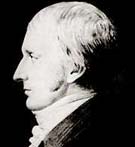 Tom Wedgewood is credited with his major contribution to photography and technology. He is considered the first man to develop a method to copy visible images chemically to permanent media. He was the son of a potter, Josiah Wedgwood, an early experimenter with Sir Humphry Davy in photography. He was born into a long line of pottery manufacturers, and was educated at Etruria. A love for art was instilled in his growing years. His short life was also blest associating with painters, sculptors, and poets, to whom he was able to be a patron after he inherited his father’s wealth in 1795. One of them was a good friend, poet Samuel Taylor Coleridge, by which Wedgwood arranged to have an annuity of £150 in 1798 so Coleridge could devote himself to poetry and philosophy.
 Joseph Nicephore Niepce made the first photographic image with a camera obscura. Prior to Niepce people just used the camera obscura for viewing or drawing purposes not for making photographs. Joseph Nicephore Niepce's heliographs or sun prints as they were called were the prototype for the modern photograph, by letting light draw the picture. Niepce placed an engraving onto a metal plate coated in bitumen, and then exposed it to light. The shadowy areas of the engraving blocked light, but the whiter areas permitted light to react with the chemicals on the plate. When Niepce placed the metal plate in a solvent, gradually an image, until then invisible, appeared. However, Niepce's photograph required eight hours of light exposure to create and after appearing would soon fade away.
Louis Daguerre studied theatre design, painting, and architecture as a young man, eventually teaming up with Joseph Nicéphore Niépce in 1822. The daguerreotype was officially announced, after many years of perfecting the process, with the help of the French Academy of Sciences in 1839. Daguerre used silver-covered copper plates to make direct positive images. The daguerreotype process of photography reduced the exposure time from eight hours to 30 minutes or so. Still a long exposure time, it was a revolutionary improvement that eventually allowed for photographs to be taken of live subjects.

William fox Talbot, born 11 February 1800, This Englishman made a photograph negative on paper known as a photogram, within a camera obscura. The works of Talbot’s followed closely in the footsteps of the works of Wedgewood. The frame was one inch square and was of a window in his home known as Lacock Abbey. In August of 1835 Talbot produced a photonegative on paper which is extant. It resides in the Science Museum in Bradford,was instrumental in advancing the process of photography. One of his discoveries was the unique property of potassium dichromate and how it would harden colloidal gelatine in correct ratio according to how much light was exposed.

Alexander Wolcott & John Johnson commenced work on the daguerreotype process, they were able to produce a portrait daguerreotype. The camera was based on a concave reflecting mirror built by an associate Mr Henry Fitz, similar to those used for making celestial telescopes. The Wolcott & Johnson patent camera enabled the successful taking of life portraiture by significantly reducing the subjects sitting time from 30 minutes to only 5 minutes, while still using Daguerre’s chemical formula.

Fredrick Scott Archer he was apprenticed as a silversmith to Benjamin Massey, Goldsmith of 116 Leadenhall Street, London. Frederick showed a significant talent for modelling and on the recommendation of Edward Hawkins, Keeper of Coins, Medals, Prints and Drawings at the British Museum, entered the Royal Academy Schools in 1836. Between 1836-51 he exhibited regularly at the Royal Academy.
His discovery in 1851 of the wet collodion process revolutionized photography, making it easier to obtain images with exposures of a few seconds only, and which also enabled multiple positive copies to be quickly made from the same glass negative plate; unlike the Daguerreotype process which produced a one off positive image on a silvered copper plate which could not be readily replicated. The Wet Collodion Plate was the preferred photographic process from its introduction in the early 1850s until the advent of the mass produced Dry Gelatin Plate in the late 1870s and early 1880s.
James Clerk Maxwell suggested a method of creating color photographs by using red, green, and blue (RGB) filters. In his experiments he photographed an colored object three times, each time with a different RGB colored filter in front of the camera lens. The three images were developed and then projected onto a screen by three different projectors, each equipped with the same color filter used to take the respective image. When brought into register (the correct alignment), the three images formed a full color image. Nevertheless the resulting image colors were to some extent unnatural, because the filters passed also light outside the visible spectrum of light, the principle was fully demonstrated

Richard Leach Maddox invented the gelatin dry plate process to replace the wet plate collodion process. Maddox began researching for a substitute for the wet plate process when he discovered that the wet plate vapours were affecting his health. There were many advantages that came from this dry plate process. For one, photographers didn't have to prepare the plate in a darkroom, they could just grab it off their shelf and go and the negatives didn't have to be developed right away. Also, this was the first time where cameras were able to be made small enough to be handheld, which made way to snapshot photography and Kodak film cameras.
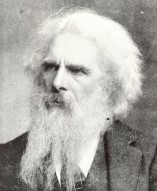
Eadweard Muybridge, whose early experiments in photographing rapid action are landmarks in the history of photography, he strove to freeze motion, to hold still for our contemplation the most rapid muscular movements of man and beast. His famous 'Motion Studies' was the product of the wealth and the whim of the railroad baron, Leland Stanford. who came to Muybridge because he had a problem. A passionate race horse breeder, he wanted to prove that a horse lifted all four feet off the ground when it trotted - something that had evaded human perception for millennia. In doing so he was unwittingly creating the basis for moving pictures. All that was necessary to recreate the motion he had analysed was to put the individual photographs in rapid succession before the eyes of an audience.
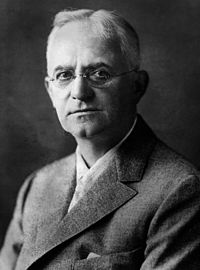
George Eastman was a great inventor in photographic technology. In 1888, he introduced a new camera, which he called Kodak, and with it the sales slogan: "You press the button, we do the rest." The first Kodak camera was pre-loaded with a roll of sensitised paper known as a film that could take a hundred pictures. A film roll that could be sent away for developing and printing. Eastman had been an amateur photographer when the hobby was both expensive and tedious. He began to manufacture them as early as 1880 before invented roll film. George Eastman wanted to simplify photography and make it available to everyone, not just trained photographers. In 1883, Eastman announced the invention of photographic film in rolls. Kodak the company was born in 1888 when the first Kodak camera entered the market. Pre-loaded with enough film for 100 exposures, the Kodak camera could easily be carried and handheld during its operation. After the film was exposed (all the shots taken), the whole camera was returned to the Kodak company in Rochester, New York, where the film was developed, prints were made, new photographic film was inserted, and then the camera and prints were returned to the customer.

Edwin Herbert Land was an American scientist and inventor, best known as the co-founder of the Polaroid Corporation, he invented inexpensive filters for polarizing light, a practical system of in-camera instant photography, and his retinex theory of color vision. He established the Land-Wheelwright Laboratories together with his Harvard physics instructor to commercialise his polarizing technology. Here he developed polarizing filters for sunglasses and photographic filters. Their company was renamed the Polaroid Corporation in 1937.

The first digital camera that was introduced to the public is the Fuji DS-1P, which was launched in 1988. The device has a 16 MB internal memory card and it has a battery. The device was not launched in Japan as well as in the United States. The next digital camera that was commercially available is the 1990 Dycam Model 1. It has a CCD image sensor and it can be connected to a computer or a laptop to transfer and store data. Eastman Kodak launched the first professional digital camera named as the Kodak DCS-100 in 1991. In order for the product to be used in special events, it featured a 1.3 megapixel sensor. The device was offered at $13,000. After the release of this model, many companies featured different models of digital cameras. In 1996, Kodak launched the first digital camera that has CompactFlash.
-----------------------------------------------------------------------------------------------------------------------
Essay
Edward Steichen and Irving Penn's
Fashion and Portraiture Photography in comparison with
Modern Fashion Photography
Fashion and Portraiture Photography in comparison with
Modern Fashion Photography
Introduction
This essay is based on discussing about Edward Steichen and Irving Penn’s lives, and also their fashion and portraiture work. I plan on comparing both of these photographer’s images with today’s high class fashion photography. I chose these photographers as they were both working in fashion photography after the war when moral was low and times were hard, which their work help raise the spirits of the public. I also find both of these photographers to be inspiring with their extensive genres of work and their unique styles. I am going to be looking at how time has changed fashion imagery and whether the industry tends to lean more towards making celebrities their key selling point. I will be looking into what we see fashion photography as today and what we are visually drawn to when looking at modern fashion photography. I will also be looking at whether portraiture and fashion are connected. To enable me to complete this essay I have researched from books, images and the Internet which is secondary information.
Backgrounds
Edward Steichen was born in Luxembourg in March 1879. He then immigrated to the United States in 1800 where his love for photography flourished after purchasing a Kodak box camera from a local photography shop. When he went to develop his first ever images, he was greatly disappointed and highly shocked with the fact that only one image was good enough to print. He then began working as an apprentice for a Lithographic firm, after suggesting to his manager they should use photographs to produce the work expected from them, he agreed with Steichen and sent him to buy a camera. He learnt the developing and printing processes and turned his cellar into a dark room to save time and money. Steichen then started to paint and his love for landscapes shone through and he believed his work as a photographer highly influenced his paintings as the only knowledge he got was from magazines and advice from others.
In the late 1800 Steichen was the driving force behind the establishment of the Milwaukee Art Students League and it was here that Edward had Richard Lorence to criticize the groups work and help Edward to progress through his life time of achievements. Steichen came across an article in a magazine for an exhibition that was being held and he was inspired by this enough for him to select some of his own images to enter into the competition which was accepted with Clarence White personally writing to Steichen to say they showed originality and a quality that needed to be shown. From there on Steichen’s Photography career flourished.
Penn was born in New Jersey in June 1917. He went on to study at the Philadelphia Museum School of Industrial Arts, were he studied drawing, painting and industrial arts. During his time studying he worked two summers for Harper’s Bazaar magazine as an office boy and apprentice artist, sketching shoes at this point Penn never even considered a career in photography.
Penn was born in New Jersey in June 1917. He went on to study at the Philadelphia Museum School of Industrial Arts, were he studied drawing, painting and industrial arts. During his time studying he worked two summers for Harper’s Bazaar magazine as an office boy and apprentice artist, sketching shoes at this point Penn never even considered a career in photography.
After graduating in 1938, he moved to New York and started as a freelance designer and illustrator. In 1940, he left New York to become a painter after having been an advertising director. He later decided to leave his job and travel the world to capture other human objects which in turn enabled him to become the fantastic portrait photographer that he is best known for today. After returning to New York he was given a job within Vogue magazine designing covers. So using a borrowed camera and his previous experience in art Irving arranged his first still life image which was published on the front page of Vogue Magazine in October 1943. Working closely with Alexander Liberman, Penn developed a highly stylised and graphical form of fashion photography. So from then on he began photographing his ideas and soon established himself as a fashion photographer. He was also one of the first photographer’s to favour the use of simple neutral Gray or white paper backdrop which developed his austere style that placed models against clean backdrops.
Both of these photographers had a lot of familiar similarities within their life experiences and within their work. Their compositional values in their images were very similar and they both tended to lean more towards their model’s being centre-weighted, which enabled their models to look quite like statues. Although Penn’s images seem to be more predominantly high contrasted and Steichen images were more of a soft focus finish.


Mrs. Cummings, Lisa Fonssagrives,
Edward Steichen, (1926) Irving Penn, (1950) (whom he married)
Fashion
Steichen and Penn show great similarities in their fashion images and they both have great portfolio of works in this genre. Although Penn added a number of modern images to his portfolio in his later life before passing away in 2009
Steichen seemed to have his own unique way of photographing fashion. He had the ability to make fashion pictures that ranged in style from classic 19th-century to Art Nouveau and Art Deco images. He would use electric lighting as his main tool of trade this ally enabled him to have the ability to show the materials fine details that were on offer as he believed women should be able to see clothing on offer photographed in clear detail. His images always had a way of imbuing decorum and calmness with his soft focus classical approach, and all of these were always guaranteed to be embraced when he was photographing fashion images. His extensive career included promoting the works of some of Vogues major couturiers.
Penn also had his own unique way of photographing fashion, being highly influenced by his previous painting experience; he was able to include again the fabrics fine details as where he would have used paints and brushes in his paintings to enhance the fine detail he used light to show the detail in his images. Penn added a certain degree of classical elegance, structured lighting, and great compositional skills and yet he still had the ability to keep a minimalism look about his images. Penn has also promoted the works of some of Vogues major couturiers in his time.


Nicole Kidman Toulouse Lautrec
Vogue Magazine (June 2004) Life Magazine (May 1950)
Irving Penn Edward Steichen
How as fashion photography changed?
Steichen and Penn had the power to create images that would sell the product as well as selling themselves as photographers. Going back to their era fashion photography was about sheer elegance, and decorum but mainly enhancing and selling the product for the manufactures. The beauty was made from the garment being sold and this was the main feature in any fashion image, although yes there was a beautiful model/celebrity wearing the garment, but it was the product that communicated the visual merits that would capture the viewer’s attention. I would consider that the whole point in fashion photography is for the manufacturer to have the photographer show the garment they have created in order to promote mass production for it.
Now in the 21st century the whole face of fashion photography seems to have changed and it seems to have taken away the products and made society look at the model/celebrity. Promoting fashion is a way of selling the latest trends and high-street brands with the main focus being the product, but yet when we look at fashion images now we are more drawn to the sheer beauty of the model and celebrities that are being used to lure a sale. Which leads me to ask do we really want to have the product or do we just want to have the looks of the model/celebrity? I do feel that with the way the press and advertising companies’ portray these models/celebrities, they are creating the impression that beauty and mainly celebrities seem to be the selling points in today’s society.
Granted fashion is still selling on high-streets and especially well on the Internet, this will always be the case as we will always need clothes, but the main feature in these images seems to be promoting the model/celebrities more and more. Yet when we look around modern society today we see that everyone is different, everyone has their own unique way and personality, we have obese and slim people, tall and small people all different from the next, but yet models/celebrities are all made to look toned, unblemished and envisage defect less humans especially and with the help of digital deception these models are flawless, which is creating fake impressions.
Are portraiture and fashion connected?

Gwyneth Paltrow (Harkins Bazaar March 2011) Alexi Lubomirski
Steichen and Penn both had the ability to photograph both of these genres and they both have an extensive portfolio of portraiture images.
Steichen was very clever in the way he did his portraiture work; he wasn’t a photographer who would make the subject look perfect but one that would make the subject look like the subject. He had a certain ability that enabled him to show the subject and their personality and nothing proves this more than his image of Auguste Rodin, this piece of portraiture had quite an impact on me when I initially viewed it and his use of grain in this image certainly enhanced a lot of Rodin’s personality. Steichen’s portraiture work is unique to him, it really is quite impressive especially considering he was privileged enough to photograph the likes of Gloria Swanson and Greta Garbo whom he famously draped with a Vail of black lace. I would certainly say that Steichen left us a creative and inspiring catalogue of work, which we can all admire and be influenced by for generations to come.

A platinum print Auguste Rodin 1902 Edward Steichen
Penn’s portraiture was also in a class of its own although he tended to use lighting techniques and the use of corners in which he would manipulate his subjects into tight spaces. His portraiture is very high contrasted again enabling him to enhance the boldness of his subject’s personalities while still enabling his subjects to look good. A good example of this is Penn’s famous portrait of President Kennedy. I was really drawn to this image and found it to be quite inspiring. The calmness within the image is prominent but then there is a look of boldness where the Presidents personality comes through although he still looks wilfully relaxed. Penn has had a great number of celebrities that he has photographed including closely cropped images of Pablo Picasso and Spencer Tracy. Penn’s portraiture’s were always relentless along with Steichen’s images.

A gelatine silver print 1984,
John F. Kennedy 1960
Irving Penn
ConclusionI have learnt that after extensive research and speaking to people with regards to the question of whether portraiture and fashion are connected I would now certainly be inclined to say yes they are very much connected. A lot of fashion photography includes the subject’s full faces and this tends to distract us from viewing the full details of the article that’s being offered to us. Therefore portraiture is then lured in to the fashion genre. With a lot of the celebrity portraits that have been made for interviews in magazines, we find ourselves being drawn to the clothing and surroundings of these celebrities so therefore we have been lured into the fashion photography genre simply by viewing interview portraits. I have learnt that although both Steichen and Penn were around more or less in the same era their works are quite different in many ways.
Bibliography
Edward Steichen: A Life in Photography (1963). Penelope Niven's Steichen: A Biography (Crown, 1997); Patricia Johnston's Real Fantasies: Edward Steichen's Advertising Photography (University of California Press, 1997); Edward Steichen: The Family of Man (1955) Irving Penn A Note book at random (2004) Colin Westerbeck: A career In Photography (1997) William A Ewing: Face The New Photographic Portrait (2006)
Referencing
http://www.ago.net/steichen
http://thecoincidentaldandy.blogspot.com/2010/11/through-lens-part-i-irving-penn-richard.html
http://www.hollistaggart.com/artists/biography/eduard_steichen/
http://www.fep-paris.org/steichen-condenast.html
http://www.biography.com/people/irving-penn-40637
http://www.photo-seminars.com/Fame/irving_penn.htm
http://thecoincidentaldandy.blogspot.com/2010/11/through-lens-part-i-irving-penn-richard.html
http://www.nytimes.com/2009/10/08/arts/design/08penn.html?pagewanted=all
http://www.dptips-central.com/irving-penn.html
http://www.photography-now.net/listings/index.php?option=com_content&task=view&id=447&Itemid=334 (top site)http://style.catalogs.com/2010/03/edward_steichen_in_high_fashio_1.html
http://www.smithsonianmag.com/arts-culture/In-Vogue.html
http://www.answers.com/topic/irving-penn
http://www.biography.com/people/irving-penn-40637
http://www.nytimes.com/2009/10/08/arts/design/08penn.html
http://www.getty.edu/art/exhibitions/penn/index.html
http://www.artinfo.com/news/story/26765/getty-acquires-irving-penns-most-extensive-work
http://www.nga.gov/exhibitions/2005/penn/penn_ss1.shtm
http://www.theweek.co.uk/pictures/29625/irving-penn-1917-2009
http://masters-of-photography.com/P/penn/penn_society_full.html
http://www.luminous-lint.com/app/photographer/Irving__Penn/A/
http://photography.about.com/od/famousphotographers/a/irvingpenn.htm
http://www.amazon.com/Irving-Penn.com
http://www.amazon.com/edward-steichen.com
http://www.profotos.com/education/referencedesk/masters/masters/edwardsteichen/edwardsteichen.shtml
http://www.leegallery.com/edward-steichen/edward-steichen-biography
http://masters-of-photography.com/S/steichen/steichen_articles1.html
http://www.spartacus.schoolnet.co.uk/USAPsteichen.htmhttp://today.msnbc.msn.com/id/33214155/ns/today-entertainment/t/celebrity-photographer-irving-penn-dies/
http://en.wikipedia.org/wiki/World_War_II
http://www.brighthub.com/multimedia/photography/articles/73772.aspx
http://ralphdeeds.hubpages.com/hub/Irving-Penns-Extraordinary-Portrait-Photographs
http://www.nytimes.com/2005/06/17/arts/design/17smit.html
http://www.nytimes.com/slideshow/2008/01/17/arts/20080118_PENN_SLIDESHOW_10.html
http://www.newyorker.com/online/2009/10/19/slideshow_091019_irvingpenn#slide=1
http://www.vogue.co.uk/news/2009/10/08/photographer-irving-penn-has-died
http://movies.yahoo.com/person/arthur-penn/biography.html

